
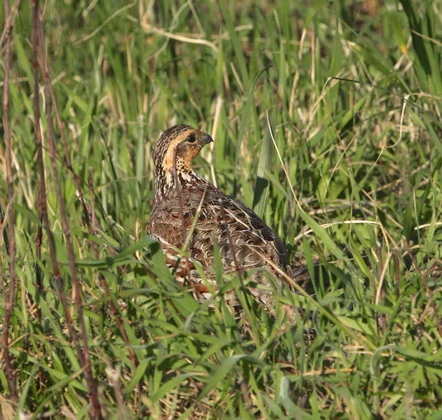
The setting
Approximately 30 acres of fallow land inside the managed area of a client project set in Midwest grasslands. The ground carried bermudagrass sod, which is the single condition most hostile to the bird the project targets.
The opportunity
No mitigation obligation was attached. The acres were already owned, fenced, and outside farming rotation. This combination made voluntary habitat work possible.
The constraint
31 acres can hold coveys, at a density of one covey per 15 acres on well-managed ground, and function as a working demonstration on land that was producing nothing.
The main field constraint shaping the design is that bermudagrass is rhizomatous, meaning surface removal won’t eliminate it.
What we produced
A habitat management plan with sequential treatments on a set timeline and a project management and monitoring schedule over the project lifecycle.
Starting with site preparation to address Bermudagrass during active green-up to target translocation to the root system.
From there, the installation a custom seed mix designed to address all habitat concerns – forage, breeding, and loafing/escape. Bunchgrasses supply nesting structure. The forb component supplies insect forage through the brood season and seed into winter. Spacing is deliberately varied rather than gridded, because structural heterogeneity is the habitat. Woody cover comes from sand plum and sumac clusters, which provide essential cover. Local stock, local genetics, no nursery cost.
Ongoing management focuses on replacing routine mowing with targeted disturbance. One growing-season vegetation assessment each year scores native grass cover, forb cover, bare ground, litter, and woody establishment.
Where it stands
Plan issued with work is queued.