
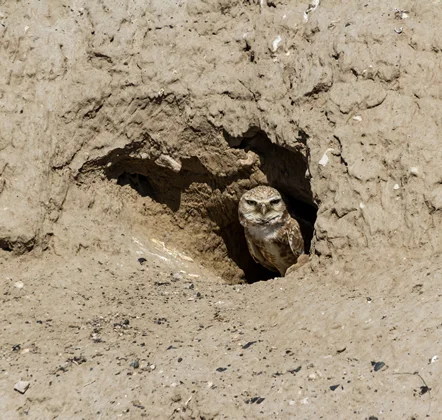
The setting
Shortgrass plains rangeland, previously grazed, on private land inside in an indsutrial landscape.
The obligation
A land use permit requiring a wildlife mitigation plan. A developer dedicated to ecological site integrity.
What we produced
A mitigation plan organized on the mitigation sequence, applied voluntarily. Avoidance first, then minimization, then rectification and reduction over time, then compensation where residual impact remains.
Borrowing that structure without being required to use it achieved two things. It provided a recognizable framework and allowed every measure in the plan to be traced to a category, a trigger, and a responsible party rather than existing only as a list of intentions.
Each measure has an accountable party and a defined verification method. Species findings are reported as discrete categories: detected on site, detected adjacent to the site, or suitable habitat present without detection. Those three carry different obligations and they are stated separately, because collapsing them is how a plan becomes unenforceable and, eventually, unusable in a hearing.